A clear input boundary
Keep the raw document landscape separate from the structured information a business application uses.
A data-processing layer that bridges raw business documents and structured product information, so downstream systems can work with meaningful relationships rather than a file landscape.
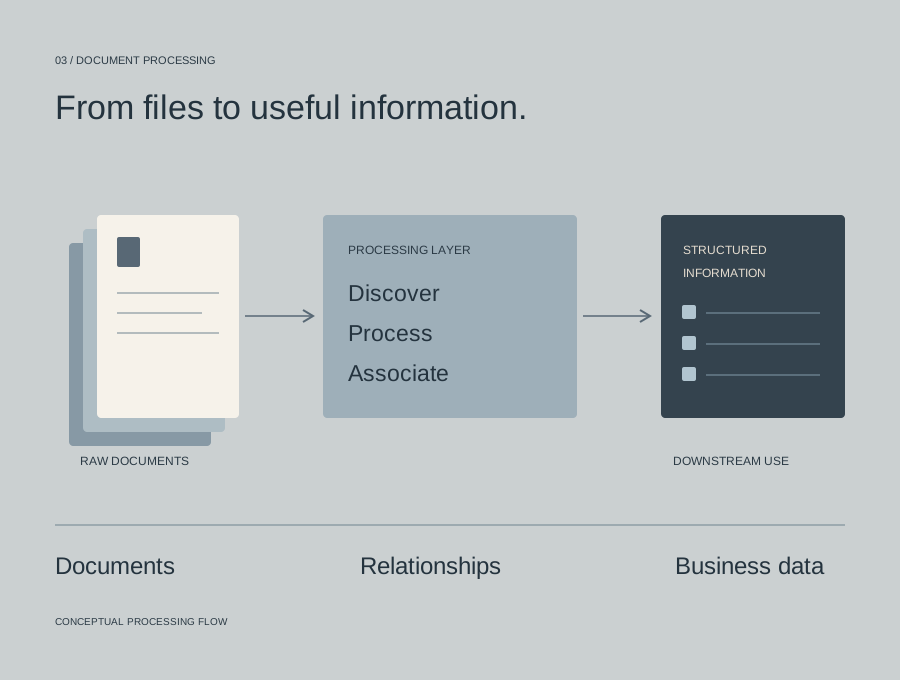
Important product information existed across files and documents rather than one clean structured source. The processing work sat between those inputs and the product information consumed by other business systems.
Real-world files are not clean data. A filename or folder can provide context, but it is not enough on its own to establish a reliable product-document relationship.
The engineering problem was turning that input into useful structured information while keeping validation and downstream use in view.
I worked on data-processing and integration workflows connecting business documents with product information. My focus was on making the information usable by downstream systems rather than treating the file system itself as the data model.
I approached source files as inputs to a processing workflow, rather than automatically trusted business records. The boundary between incoming information and structured output needed to be clear.
The conceptual flow below explains the problem at a high level. Format-specific extraction, classification techniques and review mechanisms are not described here.
Keep the raw document landscape separate from the structured information a business application uses.
Make the relationship between product information and documents useful to downstream workflows.
Treat data processing and integration as connected responsibilities rather than disconnected import tasks.
A structured bridge between document storage and product-information workflows, allowing downstream applications to work with product-document relationships without depending on the underlying file layout.
Selected identifying and implementation details are omitted because this work was completed for a client.